
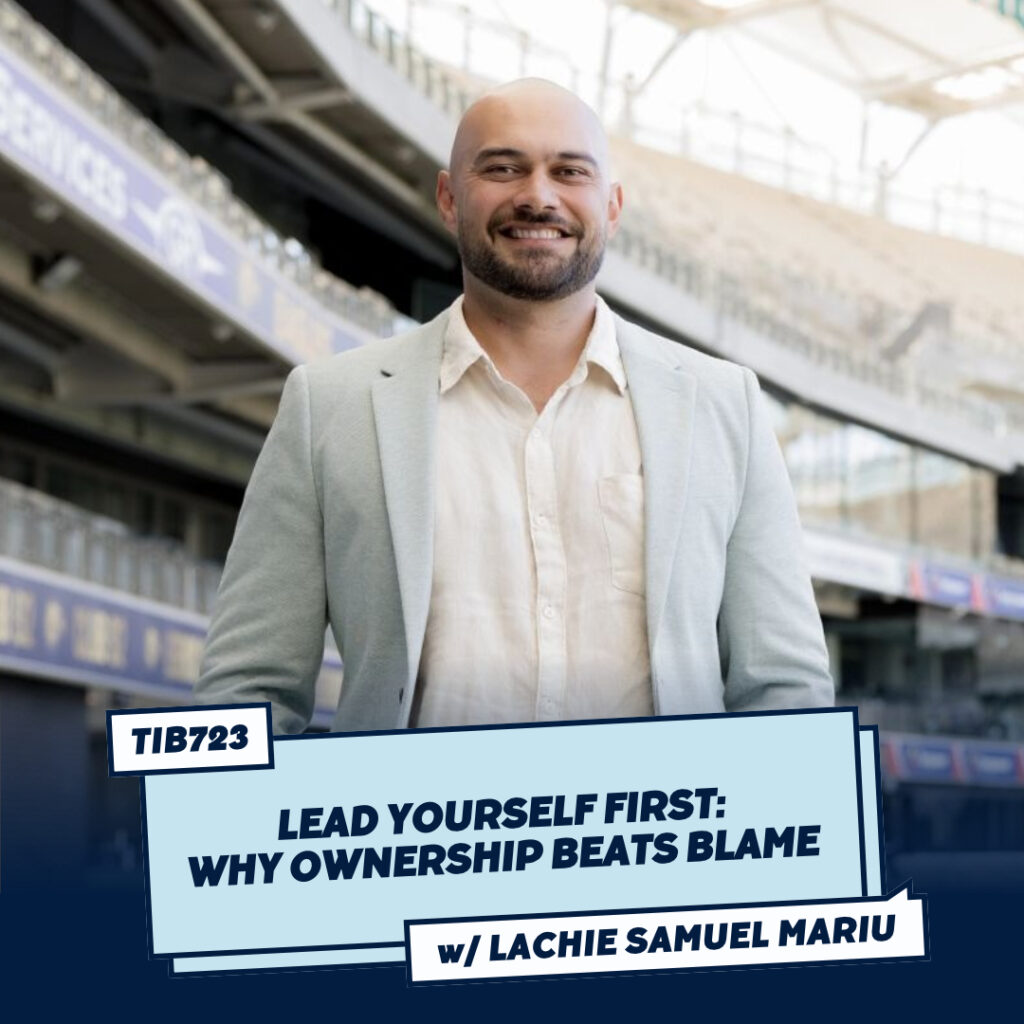



Most of us don’t think of stress as something we learned, but according to Lachie Samuel Mariu, a mental health speaker, coach and host of the Lead Yourself First podcast, that is exactly where it starts. As kids, we absorb what is safe and unsafe, right and wrong, from the people who raised us. Those lessons turn into patterns, and over time patterns become identity. It stops being something we do and becomes who we think we are.
Lachie knows this firsthand. He spent years believing he wasn’t enough, which showed up as talking over people, chasing achievement and running from accountability. A heavy period of depression while working in the mining industry finally pushed him to see a counsellor, and becoming a dad made him want to change for good. Along the way he learned to listen, first through podcasting and then through coaching.
One of the strongest ideas in his chat with Nic is what happens when we look back at our parents. Lachie has the people he coaches write letters about them, starting with the hurt and moving to the good. Most realise the things they resented helped shape who they are today. Understanding how their parents were raised softens the blame and makes room to do things a little better.
Ownership is the other big theme. A real apology, Lachie says, doesn’t come with a demand for forgiveness. If you need the other person to respond a certain way, you are protecting yourself, not taking ownership. The more he owned his past, the less he needed to lie, manipulate or be blunt just to feel safe.
Nic and Lachie also talk about why vulnerability is so hard for many men, and why storytelling creates safety. When someone goes first, others see themselves in the story and feel able to open up. It’s exactly what happened at the Tradies in Business Conference in Perth, where Lachie’s openness was met with honesty from the room.
For business owners, the takeaway is practical. Lachie has seen supervisors and managers micromanage or take over the job themselves out of fear of being blamed. When leaders feel safe being themselves, their people don’t have to protect themselves around them, and trust, ownership and results follow.