
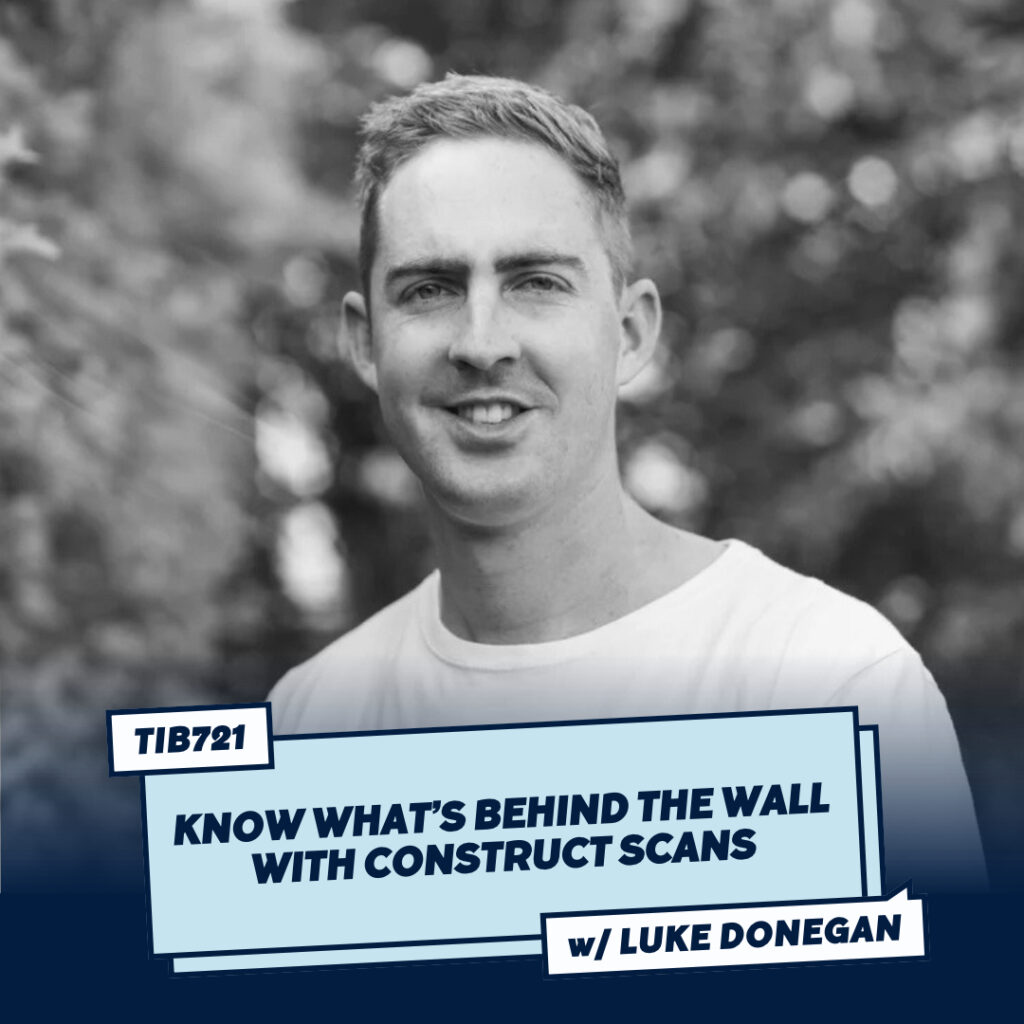



Every builder has a story about the wall they wish they had documented. Maybe it was a pipe that ended up somewhere unexpected, or an electrical run nobody could locate once the plaster was on. Finding it later usually means cutting, patching and paying twice for the same job. In this episode, Nic spoke with Luke Donegan of Construct Scans about a simple way to avoid that problem.
Luke started out as an architectural photographer, spent several years in the Army as a combat engineer, then returned to photography after wanting more time at home. While shooting builds with a Matterport 360 camera, he spoke with a builder who had taken over a thousand photos of a single house and saved them in a folder with no real way to know what was where. That conversation planted the idea. Newer Matterport cameras added LiDAR, which meant a scan could capture not just imagery but accurate measurements as well.
Luke scans a site in the 24 to 48 hour window between rough-in and plaster, while pipes, cables and framing are still visible. The result is a 3D walkthrough where a builder can click through the house and measure from one point to another. A 250 to 500 square metre home takes a couple of hours, and the measurements are accurate to within 20mm. For most jobs that is plenty to locate a stud, a service or a cable without guesswork.
There are limits, and Luke is upfront about them. LiDAR only records what it can see, so it cannot look through plasterboard like an X-ray. If a job calls for drilling close to something critical, he recommends bringing in an X-ray specialist to confirm. If you are nowhere near a service, the scan alone does the job.
The value reaches well past the build itself. Scans can be hosted online for 12 months, then stored and reactivated whenever they are needed again. That makes them useful for warranty claims, defect disputes and future renovations. A homeowner planning a kitchen upgrade years later could know exactly where everything sits before a single drill bit goes in. Luke has even scanned pool formwork before the concrete went down, so the pipes were on record.
Running a niche business comes with its own challenges. Nobody is searching for a service they do not know exists, so Luke relies on word of mouth, social ads and free demo scans, because the concept is hard to explain without showing it. Bookings are often last minute, since the glass might be going in on Monday and it is already Friday. He keeps open slots in his calendar for exactly that, and plans to bring on contractors as demand grows.
For builders, the takeaway is simple. A scan under $1,000 gives you a record that protects your work long after handover.